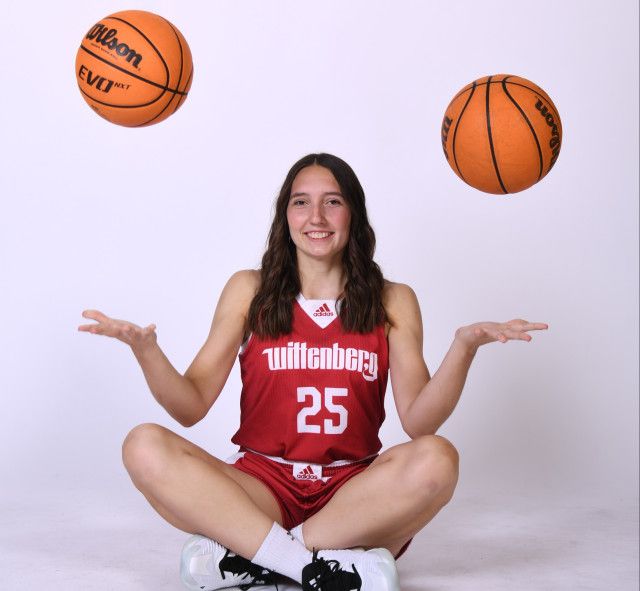
Follick, a biology major pursuing minors in education and marine science, is excited to teach students about the sciences and see their inquisitive side.
"Science is a lot of questions, terms, and labs,” said Follick, a member of Wittenberg’s volleyball team and a lead resident advisor in Residence Life on campus. “I cannot wait to see my students learn and excel in my classroom! Being chosen as a Noyce Scholar was both exciting and humbling. It felt validating to know that the hard work that I’ve put into pursuing a career in education was recognized and supported. The first people I told were my parents. Their reactions were filled with pride and encouragement. They reminded me that this is just the beginning of a great journey in teaching and making a difference.”
Part of the scholarship application included the students writing a two-page essay on the value of the Noyce Scholarship to their professional STEM teacher development.
“In my essay, I wrote about my passion for education and the ways I want to give back to communities that are often underserved,” she said. “I wrote about my career goal of becoming a teacher who not only teaches content but also empowers students to believe in themselves and discover their own passions. I discussed the importance of working in a high-need school district because I believe that all students deserve access to strong and dedicated educators, regardless of where they live. I also mentioned my college education and how it will prepare me with both the content knowledge and practical teaching skills I need to succeed in these environments and make a lasting impact.
“I chose Witt because I felt like I was home,” she added. “The environment is unmatched and is unlike anything I have ever experienced. I fell in love with the tight-knit community of students and faculty that allows me to make a personal connection with everyone on campus.”
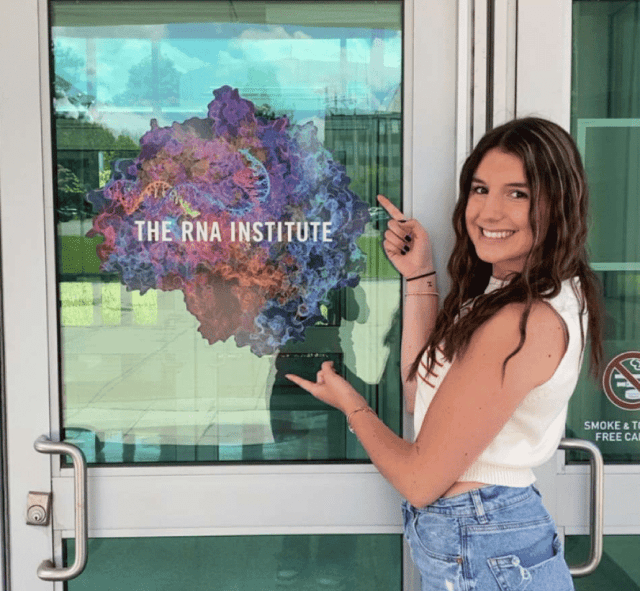
Piccola, a biology major pursuing a minor in education, has plans to be a 9th-grade biology teacher with the goal of making science fun and accessible to all students, especially those who don’t see themselves as “science people.”
“My interest in teaching is rooted in the compassion and dedication of the teachers I had growing up,” said Piccola, who is actively involved as an intern with the Lesotho Nutrition Initiative (LNI) and is the founder of AWSA (Animal Welfare Student Alliance), a new organization that will allow students to volunteer in shelters and advocate for animal welfare.
“My childhood was filled with challenges; I moved between 12 different schools, often without much parental guidance or stability. Yet my teachers stepped in to fill the gaps,” she continued. “They made sure I had the supplies I needed, helped me adjust during moves, and even gave me small gifts during the holidays to remind me I was cared for. More than anything, they gave me praise and encouragement that I wasn’t receiving at home. Their kindness, stability, and belief in me made a lasting impact. I want to provide that same support and encouragement for my own students one day. I want to create a classroom where students feel safe to explore, make mistakes, and discover new passions. I want to be a role model who shows them that they can achieve whatever they set their minds to, no matter what challenges they may face. My ultimate career dream is to merge my passion for teaching with my love of wildlife. I want to work with a sanctuary, bringing animals into schools and communities to help students and families connect with wildlife, understand conservation, and learn how to care for our environment.”
Piccola also shared that being a Noyce Scholar has lifted a tremendous weight from her shoulders and given her even greater motivation to pursue her calling as a teacher.
“With the support of Wittenberg and the Noyce Scholarship, I know I am on the path to becoming the kind of teacher who will inspire, uplift, and empower the next generation of students—just as my teachers once did for me,” she said. “I now have the financial support to make my education possible, helping me break the family cycle I came from. As the first in my family to attend college, own a car, and even have a driver’s license, each milestone feels monumental. Witt has also helped me work through the anxiety I carry from childhood and encouraged me to step outside my comfort zone. I have found community here, purpose, and most importantly, the courage to pursue my dreams. I am proud of what I’ve achieved and excited for what lies ahead.”
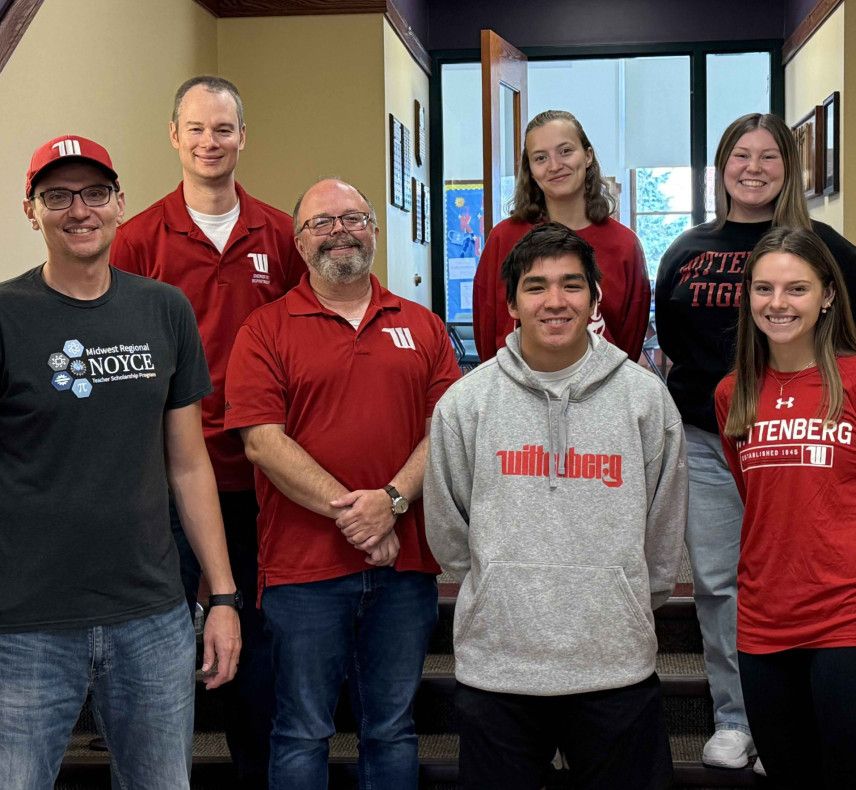
Daiga, Parker, and Marous are focused on setting up sustainable structures that will facilitate the creation of an effective pipeline of STEM educators. Their collaborative work includes the launch of a Learning Assistant (LA) Program, which will help foster co-teaching opportunities in introductory, active-learning STEM courses at Wittenberg. The project team will study the effectiveness of the LA program by comparing academic outcomes in courses that utilize LAs with their prior iterations that did not utilize LAs. Perhaps more importantly, the LA program will provide close mentoring relationships between professors and LAs on how to teach introductory content, or content they could also teach as future high school teachers.
Click here to learn more about Wittenberg’s Robert Noyce Scholarship Program or becoming a Noyce Scholar.
About the Robert Noyce Teacher Scholarship Program
According to its website, the National Science Foundation’s Robert Noyce Teacher Scholarship Program provides funding to institutions of higher education to provide scholarships, stipends, and programmatic support to recruit and prepare STEM majors and professionals to become K-12 teachers. The program seeks to increase the number of K-12 teachers with strong STEM content knowledge who teach in high-need school districts. NSF encourages partnerships between four-year institutions and two-year institutions, providing pathways leading to STEM teacher certification.
Wittenberg’s ASCENT-STEM program is supported by the Robert Noyce Teacher Scholarship Program Grant No. 2344921. Any opinions, findings, and conclusions or recommendations expressed in this project are those of the author and do not necessarily represent the views of the National Science Foundation.