

About
Springfield provides many opportunities for faculty to collaborate with community organizations to create rich and high-impact learning experiences. A key aspect of community-engaged courses is that students engage with community partners in a way that provides educational benefit for the students and meets the needs and goals of the partner. These are course that enable students to contribute to the community and develop an understanding of the real world applications of the academic discipline.
Frequently Asked Questions
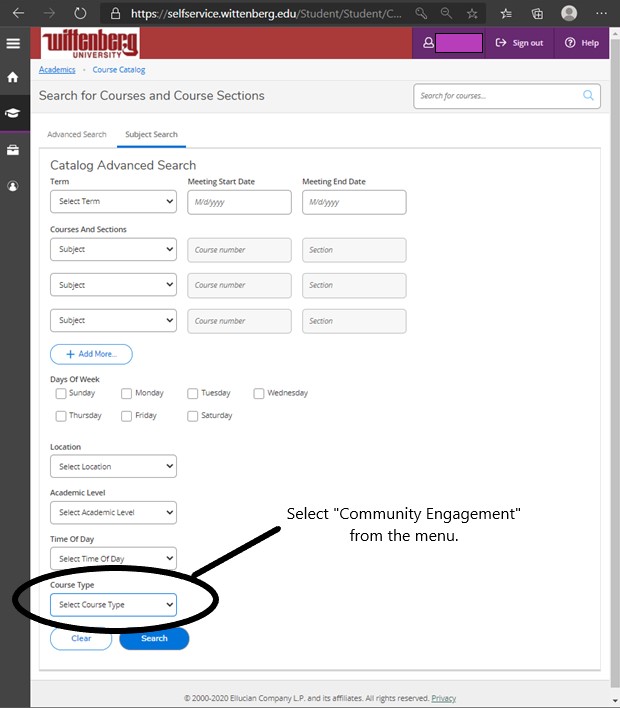
- How do I find community-engaged courses?
Courses with a community-engagement component are listed in the course catalog.
- Why should I take a community-engagement course?
Perhaps the best way way to answer this is through quotes from students who have completed community engagement courses.
“I understand that it is easy to get involved and help other communities and that there are many ways we can help contribute to help solving problems.”
“I learned the way citizen science can aid a community, and how community engagement is crucial in making a change.”
“I was more informed on finding problems, assessing and posing a plausible solution.”
“I now have a greater understanding of what I can do as an Environmental Scientist in the community.”
“Very good understanding after this course! It is honestly very rewarding to be able to put my knowledge to work, and make a difference for the better.”
“I have a better understanding of how social media can help nonprofits expand their community and resources.”
“After completing this course I was able to see that different parts of Springfield are the way they are because of historical decisions and that while we can’t change everything we can help them some.”
“I was much more excited to learn when it was hands on and actually making a difference.”
“It was a great hands on way of learning that opened my eyes to how much certain communities need help and the possible ways we can help them.”
“I think this experience impacted my learning in a very positive way. It made things more clear to see them being put to use and why certain things are done the way they are.”
“This was a good experience and gave me a chance to interact with the community while still learning.”
- What are some examples of Community Engaged Courses?
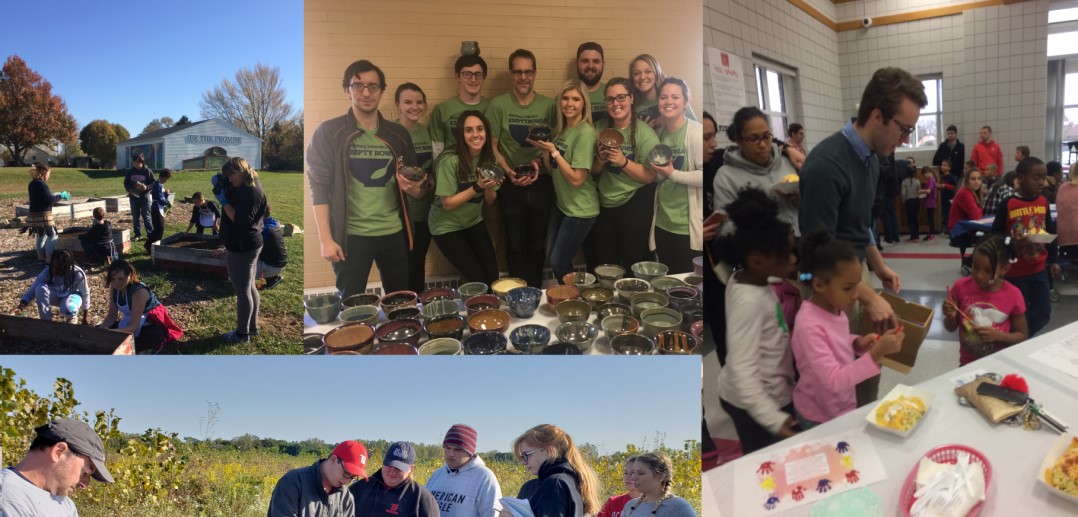
ART 392 - Ceramics: Students create ceramic bowls for Empty Bowls, a fundraiser for Second Harvest Food Bank.
PHIL 107 - Art of Living Ethically: Students in the course work as team to conduct a philosophy workshop at the Clark County Juvenile Detention Center.
BIOL 241 - Freshwater Ecology: Students engage in a semester-long research project centered around a local community issue. Groups present at a community symposium and engage with local stakeholders.
POLI 321 - Public Policy: Students develop policy proposals to address local issues facing Springfield. They learn about local issues by interviewing local leaders and present their policy proposals to the Springfield City Manager and staff.
SOCI 101 - Introduction to Sociology: Students complete a community engagement project throughout the semester in small groups that require students to volunteer with the mobile food pantry, write a reflection, and present a final project examining food scarcity and inequality.