
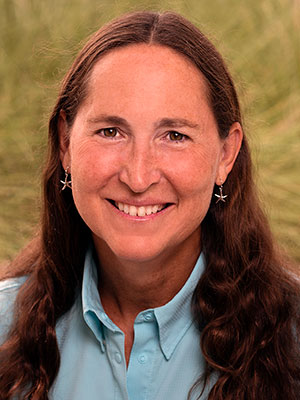
 Kathy Reinsel, Ph.D.
Professor of Biology, Marine Science
BIOL-FYS-01 Delicious Beautiful Swimmers: A Deep Dive into Sustainable Fisheries
Have you ever wondered where the seafood at your favorite restaurant comes from? Who does the fishing? Where and when do they catch it, and how do they do it? What does it mean if the fishery is 'overfished', and what does it mean if it is ‘sustainable’? In this course we will answer these questions and others together using the blue crab, (whose scientific name means 'delicious beautiful swimmer,') as the class example. You will also choose a specific commercially important species to focus on throughout the course. Together we will learn about the lives and habitats of these species, examine historical and modern methods used to catch them, and learn about their cultural significance. We will also discuss fishery management methods and identify policies that are currently in place for 'our' species. We will finish by looking at the impacts of these management strategies on the organisms, their habitats, and the lives of the fishers and the communities in which they live.
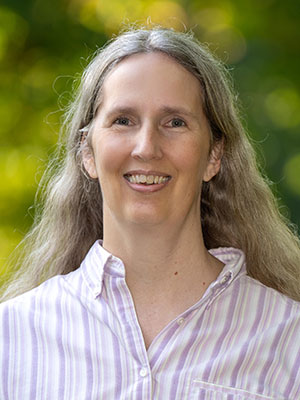 Cathy Pederson, Ph.D.
Professor of Biology, Program Director, Neuroscience
BIOL-FYS-02 Power of Addiction
Drug addiction holds great power over many individuals, their loved ones, and their communities. Addiction to alcohol, cocaine, and heroin (to name a few) impacts the physical, psychological, and social wellbeing of the individual. The neurological impact of these drugs makes quitting difficult, and we will consider together why these substances are so addictive and why treatment often fails.
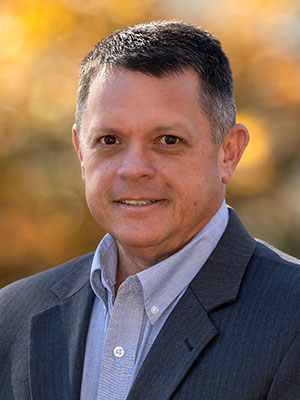 Collin Johnson, M.B.A.
Professor of Practice, Department of Business
BUSN-FYS-01 Critical thinking, Ethical Judgement and Community Stakeholders
This course will teach students the analytical tools and ethical decision-making skills needed to navigate complex business environments with clarity, integrity, and social awareness. Through case studies, collaborative problem solving, and individual and team projects, students learn to evaluate information critically, recognize biases, and make sound decisions grounded in ethical reasoning. Emphasis is placed on understanding the broader civic opportunities of organizations, exploring how for profit and not for profit companies impact communities, public policy, and society. By the end of the course, students will be prepared to think strategically, act ethically, and communicate to the workplace and the world around them.
 Kelly P. Dillon, Ph.D.
Assistant Professor of Communication & Digital Media
CMDM-FYS-01 Hashtag Happy: Positive Media Effects
Think all media is bad for you? Think again. This seminar explores the emerging field of positive media psychology, examining how media can enhance our well-being, inspire meaning, foster connection, and promote prosocial behavior. We'll investigate why some media experiences leave us feeling uplifted, moved, or motivated while others drain our energy or harm our mental health. Through exploring concepts like meaningful media, transcendent experiences, and hedonic enjoyment, you'll develop a critical framework for understanding your own media choices and their effects on your happiness and flourishing.
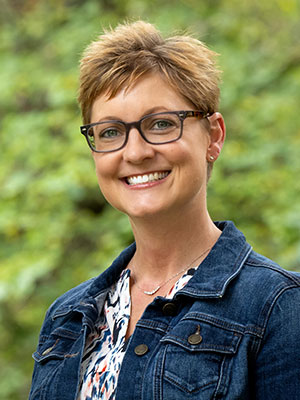 Stefne Broz, Ph.D.
Associate Provost and Associate Professor of Communication & Digital Media
CMDM-FYS-02 Creating Connection: Navigating Loneliness in a Hyperconnected World
The loneliness epidemic, declared a major public health risk by the U.S. Surgeon General in 2023, affects approximately half of adults in the U.S, with higher levels among Gen Z. Driven by a variety of factors including technology, reduced social connections, and less community engagement, and intensified in recent years by the COVID-19 pandemic, this crisis is linked to increased risks of depression, anxiety, and physical health issues. We will use scholarly research and expert insight to learn more about the causes and cures, which will help us analyze our own experiences and consider how to create meaningful connections in our own lives.
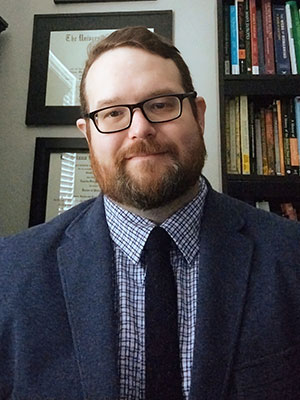 Austin McCray, Ph.D.
Student Success and Instruction Librarian
CMLN-FYS-01 Words Worth Burning: The Banning, Destruction, and Resilience of Information
The banning, censorship, and destruction of the written word is an ever-present theme of history. This course will explore global motivations for the destruction and suppression of written information throughout human civilization, while also identifying ways in which information has spread and been preserved. Students will consider the types of information frequently targeted for censorship and the continually fragile and unstable nature of human knowledge.
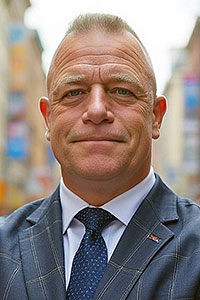 Todd Rappold, Ph.D.
Director of Graduate Studies in Education, Student Teacher Supervisor/Adjunct Professor
EDUC-FYS-01 From Passion to Profession: Public Service Careers
This First-Year Seminar introduces first-year students to foundational concepts in child development and connects those concepts to careers in education, public service and child-centered professions. Through readings, discussion, reflective writing, and engagement with campus and community resources, students examine how children grow and learn and explore professional roles such as early childhood and elementary teachers, school counselors, child life specialists, and other education-related fields. Students will work collaboratively with peers, faculty, and campus partners to investigate real-world issues related to children, families, and learning while building skills essential for academic success at Wittenberg University. Public service occupations focus on community well-being, safety, and infrastructure, spanning government, non-profit, and public sectors. Key roles include social work, public health, education, urban planning, and civil service administration. These roles offer high stability in areas like compliance, public policy, and public health.
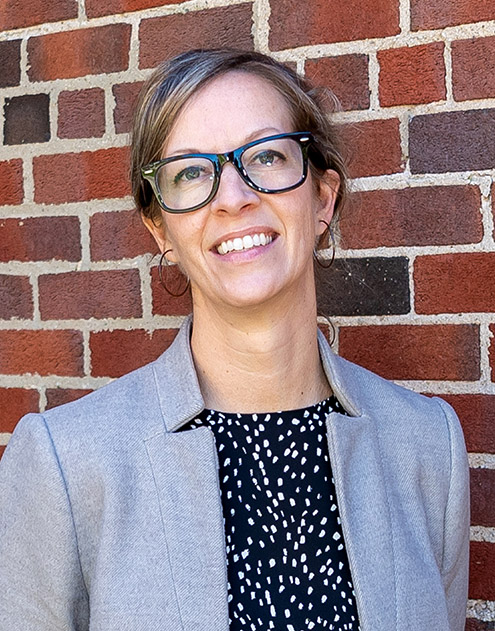 Erin Hill, M.A.
Senior Professor of Practice
EDUC-FYS-02 The Creativity Choice
Course Description: We often think of creativity as a gift we either have or we don’t – or as something that depends on an occasional flash of inspiration. News outlets have highlighted a “Creativity Crisis” for decades, and the number one watched Ted Talk of all time is Sir Ken Robinson’s 2006 “Do Schools Kill Creativity?” Yikes! Is creativity dead? Or only gifted by the muses to a select few artistic geniuses? Current research tells a different story: that creativity is a choice, that it’s something we all can practice, develop, and improve, and that it leads to a more fun and meaningful life. Creativity isn’t just for artists; employers in all fields consistently rank creativity and problem-solving as primary skills for success. This class is for everyone – whether you already love creative experiences and outside-the-box thinking, or you consider yourself the last creative person who ever lived.
 Marjory Wentworth
Director of the Writing Center
ENGL-FYS-01 Reading and Writing Social Justice
Through reading and creative writing, we will examine what it means to be a writer in the community. This is an introductory creative writing course, which requires no previous experience. Course readings will examine how writers employ elements of craft to produce work that break silences. Writing exercises will explore how creative writing can serve as a tool for empowerment and social change. Students will write essays, poetry, fiction/ creative non-fiction and work on a multi-media project.
 Andrew Graff, M.F.A.
Associate Professor of English; Chair of the Department; Director of Creative Writing
ENGL-FYS-02 The Feel Good Book Club
Description: Do the stories we tell ourselves matter? An emerging genre in contemporary fiction described as “Up-Lit” suggests they do. With eyes wide-open to the struggles and hardships in today’s world, these Up-Lit authors have decided to tell stories marked by compassion, hope, healing, empathy, joy, rest, and redemption. This course provides opportunities to read and discuss an edifying stack of contemporary, critically acclaimed novels, exploring the power of Up-Lit fiction for personal and cultural well-being. Read great novels. Be uplifted. Uplift others. The courses primary question we’ll seek to answer collectively and as individuals is simply this: How can we work toward a thriving life for ourselves and others. Like all sections of FYS at Wittenberg, this course is structured to explore its content in ways that encourage your growth as a college student and a citizen (research, speaking, writing, reading, discussion, work-ethic, collaboration).
 Molly Hopkins
Assistant Athletic Trainer
EXSC-FYS-01 The Different Shades of Health
To goal of this FYS is to discuss all areas of health, ranging from physical health to financial health. This will bring an understanding that health exists in many different forms. This course will use peer-reviewed sources to understand how health can affect us in different ways. We will also hear from speakers who are experts in different areas of health.
 Scott Rosenberg, Ph.D.
Professor of History
HIST-FYS-01 Addressing Childhood Malnutrition and Stunting in Lesotho: Meaning and Impact of Service
Honors Program
We will try and understand why Lesotho is one of the 30 poorest countries in the world with a HIV/AIDS rate of nearly 24%. We will explore how historical, economic and environmental factors have contributed to nearly 35% of children in Lesotho being diagnosed as suffering from chronic/severe malnutrition and stunting. The second part of the class is what we can do to improve the lives of children in Lesotho, through packing meals with the Lesotho Nutrition Initiative and participating in the service-learning trip to Lesotho. (note this is obviously not a requirement, but hopefully a pathway.
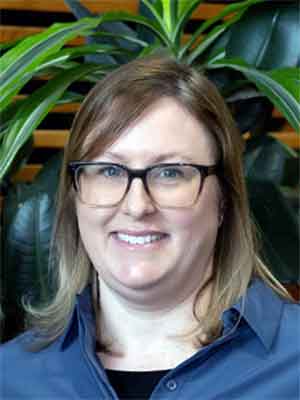 Jamie Kerestes, MEd, BSN, RN
Clinical and Field Experience Coordinator
NUR-FYS-01 Teamwork Makes the Dream Work
Many of us have participated on a team in high school. We have had experiences with both good and bad teammates. This course will focus on optimal teamwork. Through effective teamwork and collaboration high quality outcomes can be achieved. Nursing students are part of a dynamic interprofessional health care team. Teamwork is part of professionalism, which is an essential component of Nursing. This class focuses on developing skills of accurate, evidence-based oral and written (APA style) communication that effectively foster professionalism and teamwork. Interactive class activities will help build these skills which will contribute to the core components of the caring nurse.
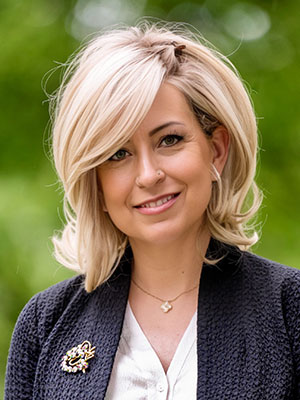 Heather Wright, Ph.D.
Associate Professor of Political Science
POLI-FYS-01 Law, Human Rights & Pop Culture
Honors Program
Why do we continue to subject one another to abuse, torture, and genocide, when so many human rights declarations and laws exist? Why is there such a difference between our theorizing about rights and our practice of rights, not only abroad but in the United States? Why do some people abuse human rights while others respect them? Much of the answer lies in cultural practices of representation and in the daunting power of ideology. This course takes as a starting point that it is impossible to separate popular culture and politics and assumes that fact and fiction help create each other: film, television and social media not only reproduce but normalize (make acceptable) ideology. How are human rights struggles represented in visual media and text? What is the role of film, literature, and social media in cultivating or impeding respect for human rights?
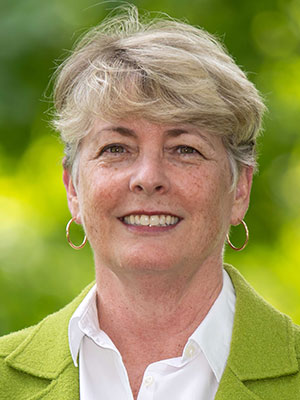 Staci Rhine, Ph.D.
Professor of Political Science
POLI-FYS-02 Media and War
This class explores how the media cover war. While describing and explaining war should be the most important goal of media, we find that the media tend to reflect the county and culture where they are based. That tends to leave citizens without the necessary information to assess war and its implications.
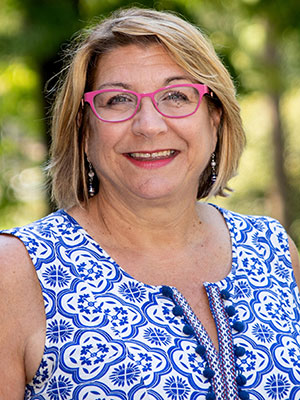 Mary Jo Zembar
Professor of Psychology
PSYC-FYS-01 Childhood: Across the Ages and Around the World
This course will focus on what it means to be born in the United States in 2024. What if you were born in a different country, or a different year? This course will investigate how children were viewed and treated historically, and in what ways children’s immediate surroundings (e.g., family, schools, and neighborhoods) and indirect surroundings (e.g., parents’ work schedule, national funding priorities) interact with their personal characteristics to impact development.
 Jen Parsons, Ed.D.
Associate Professor of Health & Sport Studies
SPMG-FYS-01 Game On: Leadership in Sport and Life
This FYS course will help students discover what it takes to lead. Students will examine how leadership skills developed in athletics translate to academic success, campus involvement, and future careers.